Credit Cards

America’s Credit Card Crisis

Americans are swiping more and saving less — and it’s starting to show. With credit card balances climbing past $1.3 trillion and delinquencies rising, households face a dangerous squeeze. Here’s what’s fueling the debt surge — and how it could reshape the economy in 2026.

How America’s Plastic Problem Exploded

Credit card debt in the United States just hit a staggering $1.3 trillion — the highest level ever recorded. After years of rising interest rates, sticky inflation, and uneven wage growth, consumers are reaching their breaking point. As the Federal Reserve keeps borrowing costs historically high, Americans are turning plastic into a lifeline for daily expenses. But there’s a darker story hiding behind these numbers: a surge in delinquencies, shrinking savings, and growing stress on middle-income households. Economists warn this trend isn’t temporary — it’s a sign that the post-pandemic boom has given way to a new era of fragile finances.

What Just Happened With Credit Card Debt

According to the Federal Reserve Bank of New York’s latest Household Debt and Credit Report, total credit card balances rose by more than $50 billion in the third quarter of 2025 alone. That jump pushed the national total past $1.3 trillion, an all-time high.

The average credit card interest rate now hovers near 21 percent, up from around 16 percent just three years ago. At the same time, delinquency rates — payments overdue by 30 days or more — have climbed to levels last seen in 2012.

Federal Reserve Chair Jerome Powell has signaled that rate cuts are unlikely before early 2026, citing persistent inflation pressures. Meanwhile, household savings have thinned after stimulus-era reserves ran dry. For millions of families, borrowing on credit cards has shifted from a convenience to a necessity.

How This Squeeze Hits Your Wallet Now

The debt spike reveals two clear pressures on consumers: inflation-driven overspending and stagnant income growth. Even as headline inflation cooled from 9 percent highs in 2022, the cost of living remains elevated — groceries, rent, and healthcare each command a larger share of household budgets. For many middle- and lower-income Americans, paychecks no longer stretch to the end of the month.

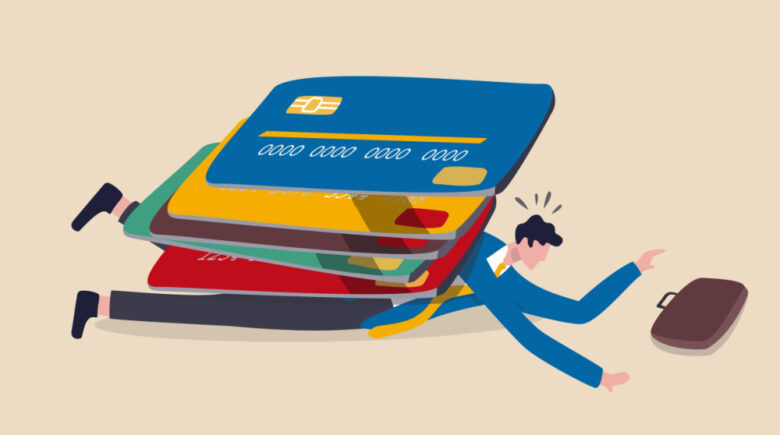
This reliance on high-interest debt carries lasting risks. Each dollar borrowed now costs more to repay than it did a few years ago, compounding the next month’s balance. Financial planners warn this creates a “debt spiral”: consumers use credit to cover necessities, accrue interest, and then borrow again to stay afloat.

Credit card issuers, meanwhile, are tightening lending standards. Data from major banks show higher rejection rates for new credit applications, particularly among borrowers with scores below 660. That means struggling households face limited credit access just as their need for liquidity rises.

On Wall Street, rising delinquencies have investors bracing for ripple effects. Analysts suggest that if defaults accelerate, banks could see pressure on earnings — especially smaller lenders more exposed to consumer credit. This pattern mirrors early stress points seen before previous economic downturns.

Small businesses, too, are feeling the pinch. Many rely on business credit cards to manage cash flow. As interest costs soar, margins thin further, weakening local economies dependent on consumer spending.

In short, the record debt figure isn’t just a statistic — it’s a warning signal for the broader U.S. economy. High borrowing costs, shrinking savings, and rising delinquencies add up to a fragile system built on credit dependency.

Where This Crisis Could Go Next

Economists are divided on what comes next. Some believe the pressure will ease once the Fed eventually lowers rates — perhaps by mid-to-late 2026 if inflation continues to cool. Lower rates could bring relief to revolving borrowers and spark renewed household confidence.

Others warn that the structural damage may already be done. With interest costs devouring nearly $180 billion in annual payments, the financial pain could linger for years. If the job market softens — a growing concern as hiring slows — delinquency rates may spike even faster.

The key factor to watch is wage growth. Without real income gains, Americans will continue financing daily life on credit. And unless policymakers find ways to stabilize costs or widen access to low-interest lending, the debt bubble may keep expanding.

Conclusion

The evidence is clear: America’s credit card binge has reached a dangerous tipping point. For consumers, the smartest move now is to focus on repayment — not reliance. Experts recommend targeting high-interest balances first, exploring consolidation options, and staying vigilant for signs of economic slowdown.

For policymakers, addressing the credit crunch will require more than rate cuts. It means tackling the underlying affordability crisis driving Americans deeper into debt. Whether that happens soon enough to prevent widespread defaults could define the economy’s next chapter.


Americans are swiping more and saving less — and it’s starting to show. With credit card balances climbing past $1.3 trillion and delinquencies rising, households face a dangerous squeeze. Here’s what’s fueling the debt surge — and how it could reshape the economy in 2026.

How America’s Plastic Problem Exploded

Credit card debt in the United States just hit a staggering $1.3 trillion — the highest level ever recorded. After years of rising interest rates, sticky inflation, and uneven wage growth, consumers are reaching their breaking point. As the Federal Reserve keeps borrowing costs historically high, Americans are turning plastic into a lifeline for daily expenses. But there’s a darker story hiding behind these numbers: a surge in delinquencies, shrinking savings, and growing stress on middle-income households. Economists warn this trend isn’t temporary — it’s a sign that the post-pandemic boom has given way to a new era of fragile finances.

What Just Happened With Credit Card Debt

According to the Federal Reserve Bank of New York’s latest Household Debt and Credit Report, total credit card balances rose by more than $50 billion in the third quarter of 2025 alone. That jump pushed the national total past $1.3 trillion, an all-time high.

The average credit card interest rate now hovers near 21 percent, up from around 16 percent just three years ago. At the same time, delinquency rates — payments overdue by 30 days or more — have climbed to levels last seen in 2012.

Federal Reserve Chair Jerome Powell has signaled that rate cuts are unlikely before early 2026, citing persistent inflation pressures. Meanwhile, household savings have thinned after stimulus-era reserves ran dry. For millions of families, borrowing on credit cards has shifted from a convenience to a necessity.

How This Squeeze Hits Your Wallet Now

The debt spike reveals two clear pressures on consumers: inflation-driven overspending and stagnant income growth. Even as headline inflation cooled from 9 percent highs in 2022, the cost of living remains elevated — groceries, rent, and healthcare each command a larger share of household budgets. For many middle- and lower-income Americans, paychecks no longer stretch to the end of the month.

This reliance on high-interest debt carries lasting risks. Each dollar borrowed now costs more to repay than it did a few years ago, compounding the next month’s balance. Financial planners warn this creates a “debt spiral”: consumers use credit to cover necessities, accrue interest, and then borrow again to stay afloat.

Credit card issuers, meanwhile, are tightening lending standards. Data from major banks show higher rejection rates for new credit applications, particularly among borrowers with scores below 660. That means struggling households face limited credit access just as their need for liquidity rises.

On Wall Street, rising delinquencies have investors bracing for ripple effects. Analysts suggest that if defaults accelerate, banks could see pressure on earnings — especially smaller lenders more exposed to consumer credit. This pattern mirrors early stress points seen before previous economic downturns.

Small businesses, too, are feeling the pinch. Many rely on business credit cards to manage cash flow. As interest costs soar, margins thin further, weakening local economies dependent on consumer spending.

In short, the record debt figure isn’t just a statistic — it’s a warning signal for the broader U.S. economy. High borrowing costs, shrinking savings, and rising delinquencies add up to a fragile system built on credit dependency.

Where This Crisis Could Go Next

Economists are divided on what comes next. Some believe the pressure will ease once the Fed eventually lowers rates — perhaps by mid-to-late 2026 if inflation continues to cool. Lower rates could bring relief to revolving borrowers and spark renewed household confidence.

Others warn that the structural damage may already be done. With interest costs devouring nearly $180 billion in annual payments, the financial pain could linger for years. If the job market softens — a growing concern as hiring slows — delinquency rates may spike even faster.

The key factor to watch is wage growth. Without real income gains, Americans will continue financing daily life on credit. And unless policymakers find ways to stabilize costs or widen access to low-interest lending, the debt bubble may keep expanding.

Conclusion

The evidence is clear: America’s credit card binge has reached a dangerous tipping point. For consumers, the smartest move now is to focus on repayment — not reliance. Experts recommend targeting high-interest balances first, exploring consolidation options, and staying vigilant for signs of economic slowdown.

For policymakers, addressing the credit crunch will require more than rate cuts. It means tackling the underlying affordability crisis driving Americans deeper into debt. Whether that happens soon enough to prevent widespread defaults could define the economy’s next chapter.